Key Fob Types: 125 kHz, MIFARE and iButton
Every access fob or card is one of a handful of technologies, and the technology decides whether it can be copied, how, and for how much. This guide shows you how to tell them apart from the outside — and what the reader on your door gives away.
Not sure? Upload a photoWhat we copy
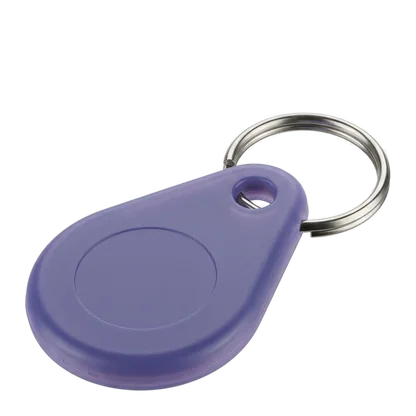
125 kHz fob
The common apartment-building fob
- 125 kHz
- EM4100 · EM4200
- HID Prox · Paxton
700 Kč
+400 Kč each extra copy
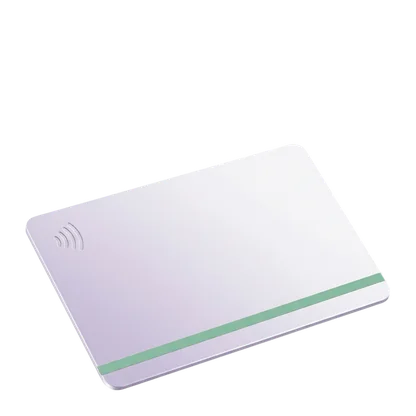
MIFARE / NFC
Encrypted — newer buildings, offices, gyms
- 13.56 MHz
- MIFARE Classic 1K/4K
- Encrypted
1 300 Kč
+800 Kč each extra copy
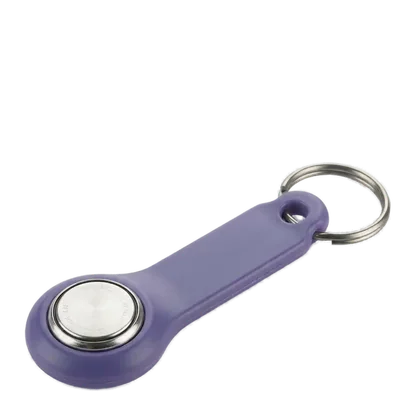
iButton
The metal button you touch to the door
- Dallas DS1990A
- RW1990 / TM01
700 Kč
+400 Kč each extra copy
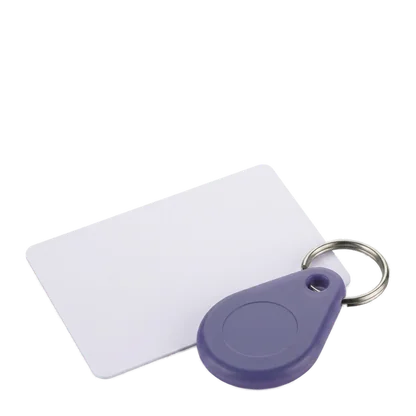
Card instead of a fob
Any of the above on a wallet-size card — or both
- 125 kHz or 13.56 MHz
- ISO card
- Same chip, new format
Same price as the fob
125 kHz proximity (LF) — the common apartment fob
Low-frequency RFID. The fob holds a fixed identifier and broadcasts it when it comes within a few centimetres of the reader; there is no encryption and no two-way exchange. Chips: EM4100 / EM4200 (by far the most common), HID Prox, Indala, AWID, Paxton Net2 tokens, Keri, IoProx.
- Looks like
- Plastic teardrop or oval fob (blue, black, grey, red, yellow), often with a moulded number — or a white credit-card-thick card
- Reader
- Small box that beeps, red/green LED, no keypad
13.56 MHz MIFARE / NFC (HF) — newer buildings, offices, gyms
High-frequency RFID, the same band as NFC in your phone. The chip can hold data and can be encrypted; the reader and the chip exchange messages. MIFARE Classic 1K and 4K are the widely deployed ones in Central Europe and can be copied, because their encryption (Crypto-1) has been broken since 2008. MIFARE DESFire, MIFARE Plus in SL3, HID iCLASS SE / Seos and LEGIC use proper cryptography and cannot.
- Looks like
- Physically identical to 125 kHz fobs and cards — the photo alone is sometimes not enough
- Clues
- Card doubles as ID or gym pass; flat black/white plate with NFC logo; building fitted after ~2012; your phone's NFC detects the card
- Copyable
- MIFARE Classic yes; DESFire / Plus SL3 / iCLASS SE / Seos / LEGIC no
iButton / Dallas — the metal button
Not RFID at all: a small stainless-steel button (16 mm) on a plastic holder, carrying a unique serial number that is read by physical contact with a metal ring or slot on the door. Common on Czech panel-building entrances fitted in the 2000s, on Ukrainian and Russian intercoms, and on some caravan parks and utility rooms. Chips: DS1990A and the rewritable RW1990 / TM01 that copies are written to.
Remotes with buttons — not fobs
A key-ring device with one or more buttons that opens a gate or garage from across the street is a radio transmitter, usually rolling-code (KeeLoq, Nice, Somfy, BFT, Hörmann). It is not an RFID fob and we do not copy or program them; the gate installer or a car-key specialist does.
Can a phone replace the fob?
Usually not. A thin card in your wallet is the reliable "phone-sized" option — same price as a fob. Why the phone itself falls short:
- 125 kHz: no. Phones have no low-frequency radio.
- iButton: no.
- MIFARE Classic: in theory an Android phone can present a chosen identifier over NFC, but most building readers check things the phone cannot reproduce, and iPhones do not allow it at all.
Still not sure? Look at the reader
Match your reader to the technology — or upload a photo of the fob and we tell you:
- Metal ring or slot you touch a button to: iButton.
- Box with a keypad and a beep, or a small plastic panel by an older intercom: probably 125 kHz.
- Flat glossy plate with a wave / NFC logo, or a reader that also takes the card for the lift or gym: probably MIFARE.
Questions about this
How do I know if my fob is 125 kHz or 13.56 MHz?
Hold it against the back of a phone with NFC on. If the phone reacts, it is 13.56 MHz. If nothing happens, it is almost certainly 125 kHz. Or upload a photo and we identify it.
My fob says HID. Can it be copied?
HID Prox (125 kHz) yes. HID iCLASS classic yes in many cases. HID iCLASS SE and Seos no. The label on the housing is a start; the photo and, if needed, a read of the chip settle it.
Can you make a card instead of a fob, or a sticker?
Yes. The copy can go on a fob, a credit-card-sized card, or a thin sticker for the back of a phone case, at the same price. Stickers work best with 13.56 MHz; 125 kHz stickers exist but are thicker.